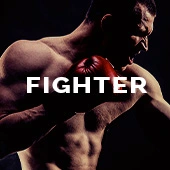
When you know how frustrating the end of DWayne Holmes Jnr’s amateur days was – and when you know how agonizing his entry into the professional ranks turned out to be – it becomes easier to understand why the junior featherweight prospect wants to move quickly into the next phases of his career.
Especially at 27 years of age, older than most prospects tend to be when they are still in developmental-level fights.
Especially after nearly 20 years since he first laced up a pair of gloves.
Oh, and especially now that he has a young child to provide for.
“I see myself becoming an elite fighter in my division. This year, for sure, to reach the top 15 in my division. So big things coming up,” Holmes said in an interview with BoxingScene.
That is an ambitious goal, given that “Sugar Wayne” Holmes has not even had a dozen pro fights. He moved to 11-0 (6 KOs) on January 30 with a technical knockout victory over the 9-15-2 Nestor Robledo on a show in Hanover, Maryland.
“I’m in a smaller division, 122, so we kind of get there a little quicker than bigger weight classes,” Holmes explains. “And then my age. I’m 27. Not too much time. You know, time don’t wait for no man. So, you know, got to get that ball rolling.”
Time don’t wait for no man. But this man has been waiting – and working – a long time.
Holmes’ father introduced DWayne Jnr to the sport when he was 6 or 7 years old, and he started training as he approached the age of 8, when he would be allowed to compete as an amateur. DWayne Snr had a limited number of amateur boxing matches when he was younger. Snr’s cousin Derrik Holmes was a professional in the late 1970s and early ’80s who compiled a record of 17-3-1 (11 KOs) and challenged Wilfredo Gomez for the WBC junior featherweight title and lineal championship in 1980, losing via fifth-round TKO.
There are mentions of a very young DWayne Jnr in Boxing Along the Beltway, the longtime site run by Gary “Digital” Williams, the dean of boxing reporting in the Washington, D.C., and Baltimore regions. The earliest coverage was in 2008, when Holmes traveled to Kansas City, Missouri, and won a championship in the 9-10 year old 55lbs novice division. Among the other notable regional names succeeding in that same tournament: Gervonta “Tank” Davis, Lamont Roach Jnr, Dusty Harrison, Thomas Williams Jnr, Gary Antonio Russell and Calvin Ford.
Like many kids, Holmes was interested in several sports, playing football, soccer, baseball and basketball. But boxing is what stuck.
“The team sports, I can play really good. Soccer was my favorite, but I can play good and my teammate messes up and costs us the game, So I get upset. It’s like, dang, I did everything I can do,” Holmes said. “But then when I learned boxing, it’s like it’s all on me. I’m the only person that can keep their hand down, keep my hands up, punch, so it’s all on me. I like how it’s on me. It’s a solo sport.”
Holmes started to realize his talent for boxing around the same time he started taking this sport more seriously, when he was around 11 or 12.
“I'd come out of football practice and go straight to the gym and spar, and I kinda beat up the other kids,” he said. “It just was natural.”
He continued to compete and develop, from an adolescent to a teenager to a young man aspiring to participate in the pinnacle of amateur boxing. Holmes remained in the unpaid ranks until a sour experience while attempting to qualify for the Olympics.
“I don’t want to say it was a robbery, because everything is a learning experience, but it was a crazy result of a fight,” Holmes said. “So after that, it was just like, my dreams was to try to get to the Olympics. And they kind of crushed my dreams. I didn’t really have the will to fight amateur no more. Even as soon as after that fight, before we even left the venue, I told my father and Coach Andrew [Council], I'm done. This is what I want to do: I want to turn pro.”
But here’s the thing: Holmes turned pro in 2020 but wasn’t able to have his first professional prizefight until February 2022. Yes, there was the Covid-19 pandemic that shut down all sports and then, as the world reopened, still limited how often boxing events could be held.
That’s not the sole reason it took so long for Holmes’ actual debut.
“I had like four fights that fell off,” Holmes said. “It was like opponents didn’t want to fight, pretty much.”
Holmes fought four times in 2022, twice in 2023, three times in 2024 and only once in 2025. His bout this January ended a nine-and-a-half-month layoff. All but one of his fights have been in D.C. or Maryland, allowing Holmes to begin to build a local fan base. He was born in D.C., and he grew up and lives in nearby Prince George’s County, Maryland. Beyond geography, it helps that he has an entertaining style.
“I’m an aggressive fighter. I don’t run away from no action,” Holmes said. “I'm right there trying to cause some damage.”
Holmes’ aggression and inflicting of damage forced Robledo’s corner to wave off the fight after the third round. An accidental clash of heads opened a cut over Robledo’s left eye in the first round, and Holmes dominated his foe with combinations to the head and body. Robledo was game but outgunned.
“My last fight was good. Definitely could have gone better, but it was good for nine months’ layoff,” Holmes said. “I know my capabilities and the way I train every day in the gym. In the fight, [I was] reaching, smothering my work too close, things like that. I think I did well with my body shots.”
Holmes is guided by Council, a two-time world title challenger who fought professionally from 1990 to 2003. Council’s career included a victory over Buddy McGirt and defeats against Bernard Hopkins, Winky Wright and Keith Holmes (no relation to DWayne).
Council agrees that DWayne Holmes has the talent and tools to be in the top 15 of his weight class by the end of the year. The problem now is an aggravating reminder of what they confronted at the start of his career. They are trying to get quality opponents to accept matches so that Holmes can be in longer bouts and catch the attention of the sanctioning bodies who compile the rankings.
Where Council’s confidence in his fighter particularly comes from, then, is what he’s seen while Holmes has sparred against other good boxers.
“He has the ability to slow things down already. That could come from his age. He’s a good body puncher. He doesn’t jump back too much. I’d like him to go to the body a little bit more and use his jab a little bit more,” Council said.
Said Holmes: “I’ve improved a whole lot. Just from my boxing IQ, from my strength, speed, everything. I definitely see the growth. I still need to work on a lot. To become an elite fighter, you got to damn near be perfect. So it’s a lot. Everything, even combinations, even still my IQ, there’s still more room to grow.”
Holmes isn’t the only one growing. His daughter is 18 months old. He describes her as “goofy,” “energetic” and “super smart,” and that she now understands what he tells her.
“I feel like just last week I’m holding her head up,” he says.
When you see the smile on Holmes’ face as he talks about his daughter and how fatherhood has changed his life, and when you hear the love he has for his family, it becomes easier to understand why he wants all of the sacrifices, all of the missed birthdays and other events, to at last pan out, why he doesn’t want to wait much longer for the upper levels of his profession.
“Everything I do is for her, just in the ring and outside the ring, just life in general,” he said. “I come from a family, like my dad always made sure we had before him. Now I'm in that position to give that, too.”
David Greisman, who has covered boxing since 2004, is on Twitter @FightingWords2. David’s book, “Fighting Words: The Heart and Heartbreak of Boxing,” is available on Amazon.